


 ) or https:// as an added precaution.
Ever wondered how our school canteens serve nutritious and affordable meals for our students?
How Do Canteens Serve Healthy Meals?
Food served in school canteens adhere to the Health Promotion Board (HPB)'s Healthy Meals in Schools Programme (HMSP) guidelines, which aim to reduce fat, sugar and sodium, and encourages a balanced diet that covers the four main food groups: wholegrain carbohydrates, proteins, vegetables and fruits. Products served by vending machines should also carry the Healthier Choice Symbol.
Schools and HPB conduct regular checks to ensure compliance. Stallholders that do not meet these requirements receive guidance and support, with stronger action taken only if they continue failing to meet guidelines.
How Do We Keep Canteen Food Prices Affordable?
To reduce overhead costs, schools charge low rental rates during the school term, ranging from $5 to $15 per month, and do not charge rent during the school holidays. MOE also secures favourable electricity rates through demand aggregation, and these savings are extended to canteen stallholders to help with operating costs.
Students on the MOE Financial Assistance Scheme (FAS) receive meal subsidies that pay for at least seven meals per week for primary level and at least 10 meals per week for secondary level. Students who need additional financial assistance, including those who are not eligible for MOE FAS, can approach their schools for school-based assistance.
What Additional Support Do Canteen Stallholders Get?
Beyond low rental rates and favourable utility charges, MOE conducts periodic reviews of the recommended meal price range to reflect current market condition. Schools with below-range prices work with stallholders on gradual increments, balancing affordability with business sustainability and food quality.
While stallholders need to ensure there are sufficient meal options within the recommended price range, they can also offer some meals above this range to allow for a wider variety of dishes.
Why Are There Still Challenges in Filling Vacant Stalls?
While most schools have adequate canteen stalls, some still face challenges finding stallholders to fill vacant stalls. Besides older stallholders retiring, school canteens also face competition for stallholders from food courts, hawker centres and other public eateries, which serve a greater customer base, operate longer hours, and offer greater menu flexibility. In fact, about 60% of schools reported difficulties filling vacant canteen stalls in 2024, compared to about 34% in 2020. This issue is likely to become more pronounced in the years ahead.
How Is MOE Addressing These Challenges?
To address these challenges, MOE worked with Yusof Ishak Secondary School (YISS) to pilot the Central Kitchen Meal Model (CKMM) since 2022. Through the pilot, YISS has seen shortened queue times and was able to offer students a wider variety of healthy and affordable meals.
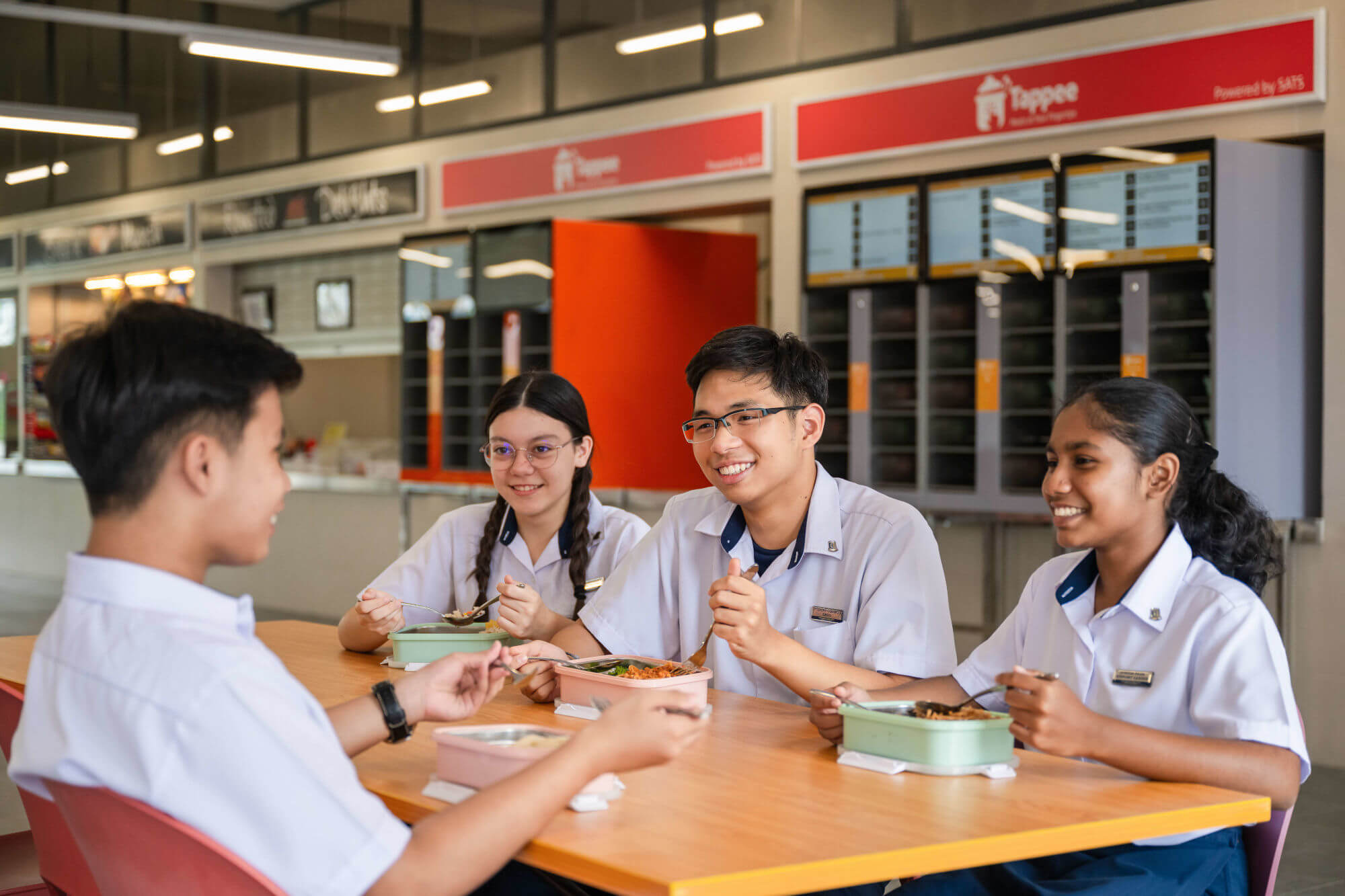
Students from Yusof Ishak Secondary School during recess – photo credit: MOE
Building on the positive feedback, MOE will expand the CKMM to 13 more schools from 2026. These schools opted to adopt the CKMM primarily due to their challenges in engaging sufficient canteen vendors, which would leave students with limited food variety.
MOE selected the CKMM operators by looking at factors like meal price competitiveness, how comprehensive their proposals were (e.g. delivery and logistics, business continuity plans), variety of menus, and their track record. Like canteen stallholders, food served by central kitchens would also need to abide by the HMSP guidelines. Operators are also required to provide at least one full meal priced at no more than $2.70 in primary schools and $3.60 in secondary schools. Schools will work closely with the operators to offer a diverse and nutritious menu for students on a daily basis, taking into account feedback from parents and students.
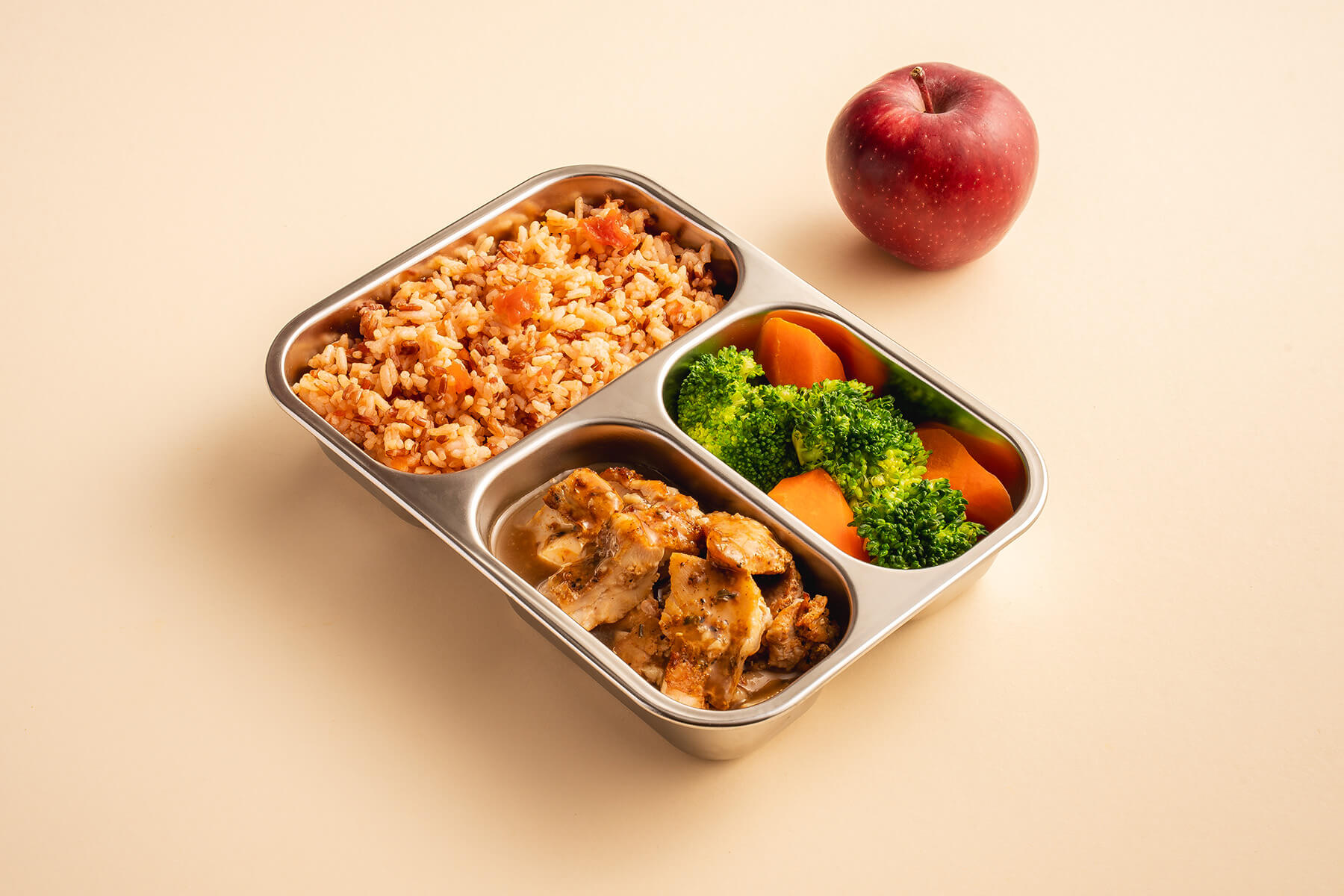
Roasted chicken with tomato mixed grain rice – photo credit: Chang Cheng Holdings Pte Ltd
CKMM operators must be licensed by the Singapore Food Agency (SFA) and ensure their food handlers are trained and registered before they are allowed to prepare food and drinks for sale. Those who fall short of proper food safety standards will be required to take immediate corrective action and may be subjected to enforcement actions and suspension of operations by SFA, or have their contracts terminated by MOE.
Central kitchens would allow for better quality control of school meals, as schools can work directly with a single food service provider instead of managing multiple individual stallholders. Parents also need not worry that students will not have opportunities to practise social interactions and money-handling skills, as schools participating in the CKMM will still retain physical stalls for beverages and snacks.
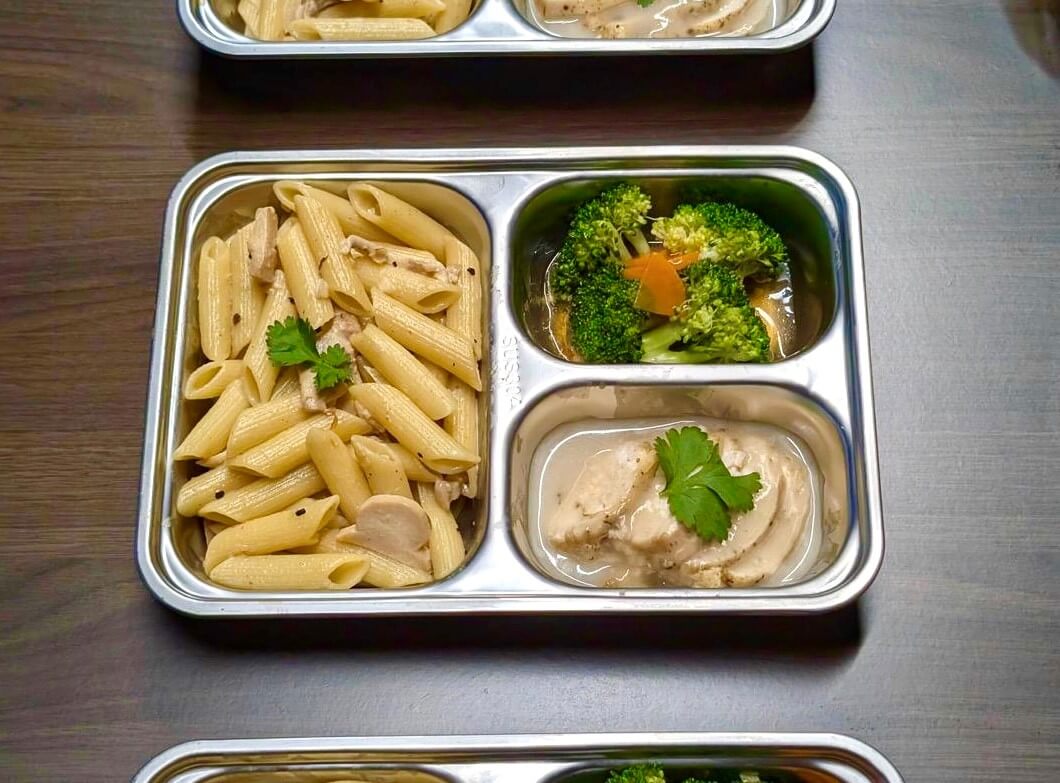
Mushroom macaroni with grilled chicken breast and broccoli – photo credit: Gourmetz Pte Ltd
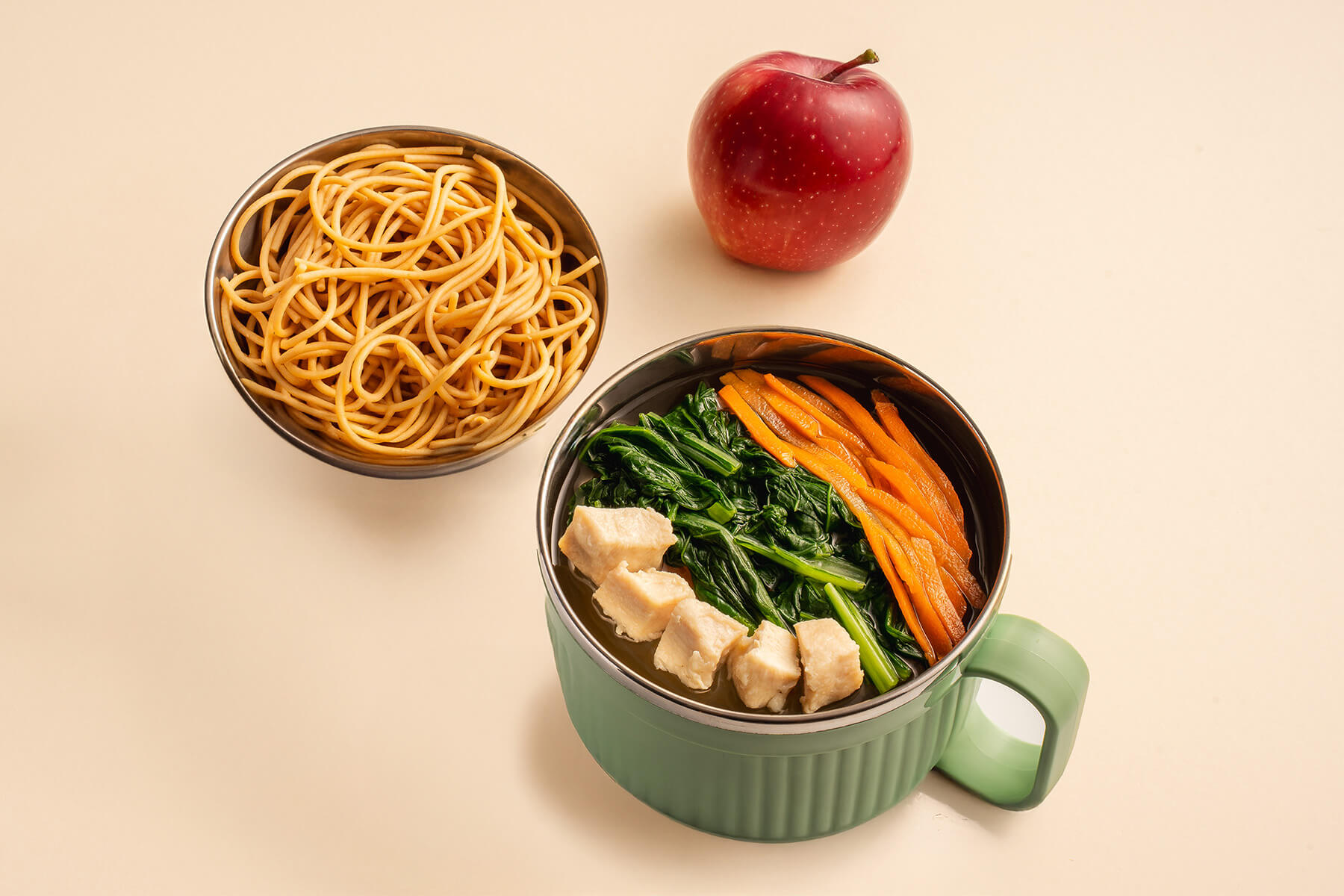
Chicken soup with yellow noodles – photo credit: Chang Cheng Holdings Pte Ltd
So What's Next for Our School Canteens?
The Individual Stallholder System remains the primary canteen model in most schools. MOE will continue efforts to support all schools regardless of their canteen operating system, including seeking favourable utility rates, maintaining nominal rental fees, and regularly reviewing food pricing guidelines to ensure business viability. Schools also have the autonomy to supplement canteen stalls with other solutions like vending machines, provided they comply with the HMSP guidelines.
Every student deserves to have access to quality meals, and we will keep studying ways to help our school canteens operate sustainably without compromising on nutrition, taste or affordability.